
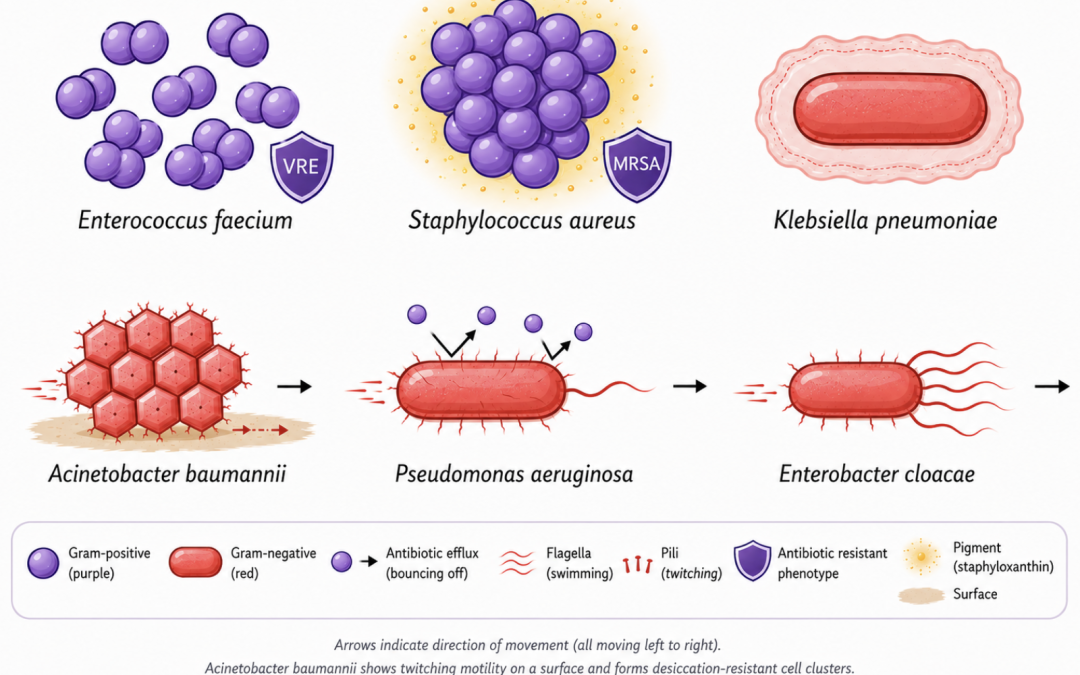
The ESKAPE Pathogens: Six Major Medical Challenges
Every year, hospital-acquired infections kill hundreds of thousands of people worldwide. Behind many of these deaths are six bacteria known collectively as the ESKAPE pathogens: Enterococcus faecium, Staphylococcus aureus, Klebsiella pneumoniae, Acinetobacter baumannii, Pseudomonas aeruginosa, and the Enterobacter spp.
What unites these six bacteria, leading them to be highlighted by the World Health Organisation (WHO), is not only their ability to cause disease in humans, but also their capacity to withstand the action of many antibiotics that doctors usually prescribe to kill them. Remarkably, some of these pathogens have developed resistance to virtually every class of antibiotic available, leaving clinicians with few or no treatment options for patients with these infections. Being able to read the information in their genomes is crucial for us to understand how they have become resistant and to suggest routes to eradicate them from the body.
About MORF Genomes
MORF Genomes is a web-based platform developed at the University of York that enables researchers, educators, and students to upload, explore, and compare microbial genome sequences without requiring specialist bioinformatics expertise. Originally developed to support research into microbial stress responses during industrial bioprocessing, MORF has since grown into a versatile tool for genome annotation and comparative genomics across a wide range of applications. In the project described here, MORF Genomes was used to upload and analyse the complete genome sequences of examples strains of all six ESKAPE pathogens, comparing their genetic makeup to identify what makes each one unique and what they have in common.
Click here to explore the ESKAPE Pathogen genomes in MORF.
Six Dangerous Pathogens, Six Different Strategies
Despite sharing the ESKAPE label, these six bacteria are remarkably different from each other. Two are Gram-positive (E. faecium and S. aureus), meaning they have a thick cell wall and a different structure of their cell surface than the remaining four Gram-negative species. Their genome sizes range from 2.82 Mb in S. aureus NCTC 8325 to 6.26 Mb in P. aeruginosa PAO1, making P. aeruginosa the largest genome of the six and reflecting its greater metabolic versatility than the other five organisms.
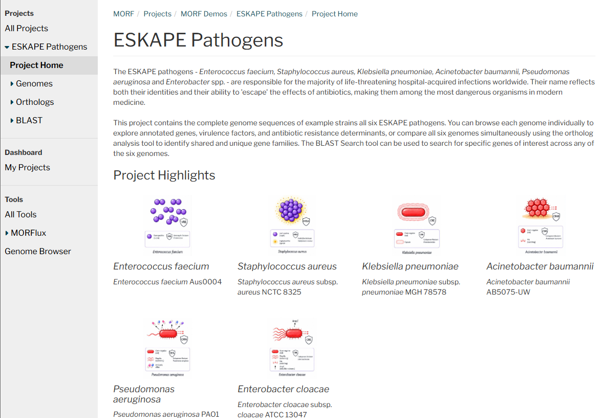
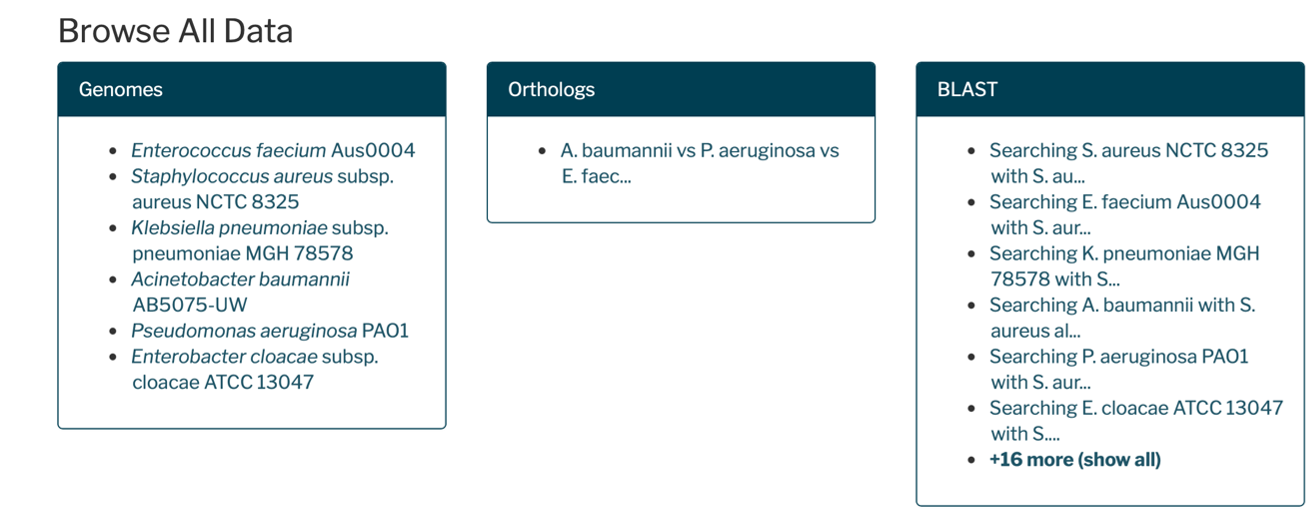
📷Screenshot: The ESKAPE Pathogens project homepage showing the six genome entries and navigation options
Each pathogen has evolved distinct sets of strategies that are needed to cause infections that are not treatable by antibiotics, through encoding a combination of virulence and colonisation factors, combined with antibiotic resistance. For example, S. aureus relies on a powerful arsenal of toxins to damage host tissue and release nutrients and at the same time is often resistant to methicillin (hence MRSA) and other beta-lactam antibiotics. E. faecium has acquired resistance to vancomycin, one of the last-resort antibiotics. K. pneumoniae hides behind a thick protective capsule and is resistant to modern beta-lactam antibiotics (carbapenems). A. baumannii can survive on dry hospital surfaces for weeks and also are resistant to carbapenems. P. aeruginosa thrives in wounds and the lungs of cystic fibrosis patients and is intrinsically resistant to many antibiotics, which we’ll look at later. Finally, E. cloacae can modulate antibiotic resistance to carbapenems in direct response to antibiotic exposure, through modifications to the outer membrane structure (Murtha et al., 2022).
Comparing the Genomes: What Do These Six Pathogens Share?
Using MORF’s ortholog analysis tool powered by OrthoFinder v3.1.3, we compared the protein sequences of all six genomes simultaneously to identify which genes are shared and which are unique to individual pathogens. Across the six genomes, 10,070 orthogroups were identified in total.
Only 317 genes were found in a single copy in every genome. These represent core essential genes shared by all six bacteria despite their biological differences and reflect the fundamental machinery of bacterial life. As the common ancestor of these bacteria existed about 3 billion years ago, these genes have been around for a long time!
Among them are the RNA polymerase subunits encoded by rpoB and rpoC, the molecular targets of the antibiotic rifampicin, found in identical form across all six pathogens. Similarly, the 30S ribosomal protein S12 (rpsL) and multiple 50S ribosomal subunit proteins are universally conserved, reflecting the ancient and essential role of the ribosome in protein synthesis. These same ribosomal components are the targets of aminoglycoside antibiotics such as streptomycin.
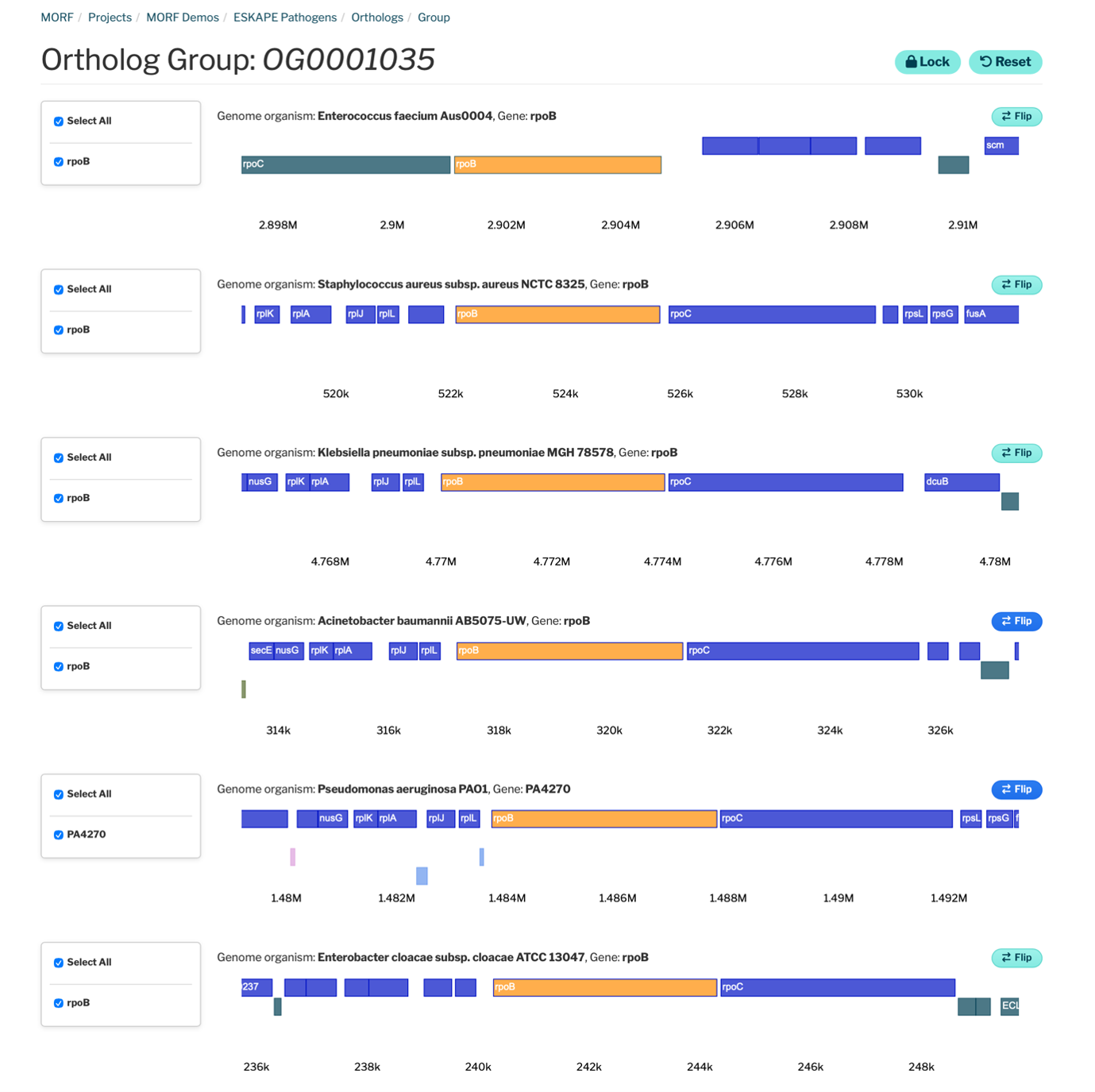
📷 Screenshot: Ortholog analysis results of the single copy gene shared by all 6 ESKAPE pathogens. The ortholog view allows users to flip the orientation of the gene should it be encoded on the reverse strand as it is for A. baumannii and P. aeruginosa.
The cell wall biosynthesis pathway is represented across all six genomes, which requires a large number of genes, including the mur genes (murB, murC, murD, murE, murF, and murG) that encode some of the steps in assembling the sugar and peptide building blocks needed to assemble the peptidoglycan. Later the products of other conserved genes join these building blocks together to create the strength of resulting wall and these proteins are the molecular targets of beta-lactam antibiotics including penicillin and its derivatives. This is not coincidental. The most successful antibiotics in clinical use target conserved essential processes which result in either cell death (bactericidal antibiotics) or stopping of cell growth (bacteriostatic antibiotics). Based on this idea, one would imagine that antibiotics then should target many bacteria, which is what we call having a broad spectrum. However, in reality a bacterium just having the molecular target alone does not mean that it will be sensitive to the antibiotic. For example, the 4 Gram -ve ESKAPE pathogens have an additional layer beyond the peptidoglycan, the outer membrane, which is very good at stopping antibiotics getting to their targets. Hence, many antibiotics have much narrower spectrum than you might think due to other adaptations they have made over millions of years of evolution.
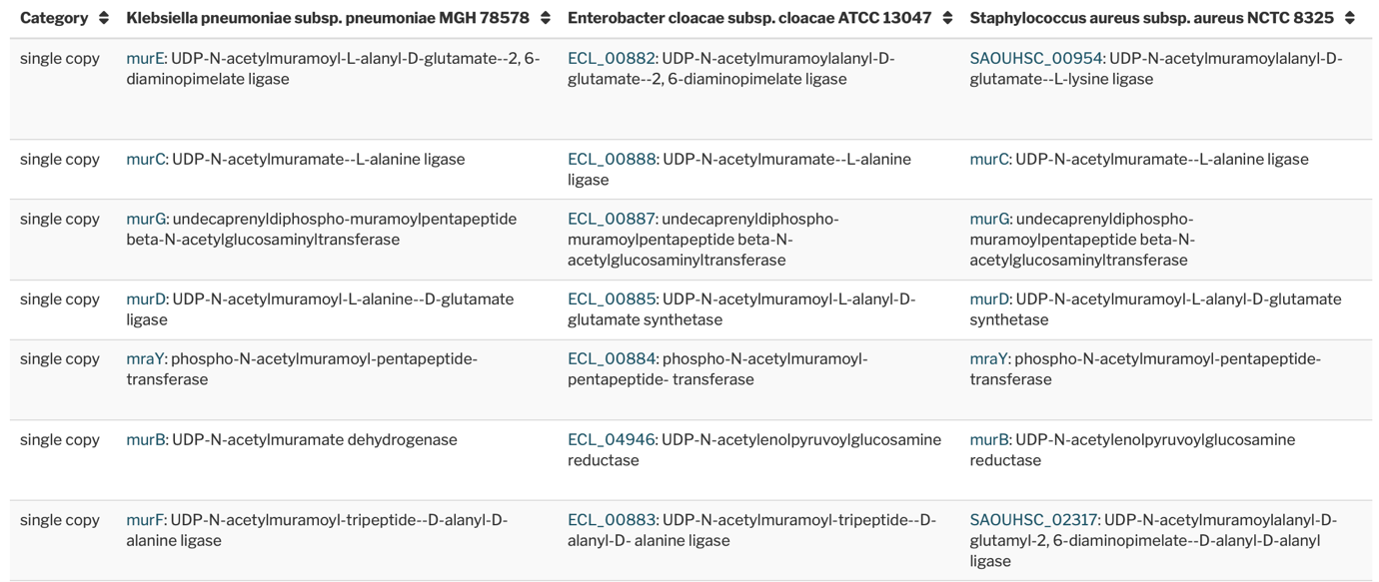
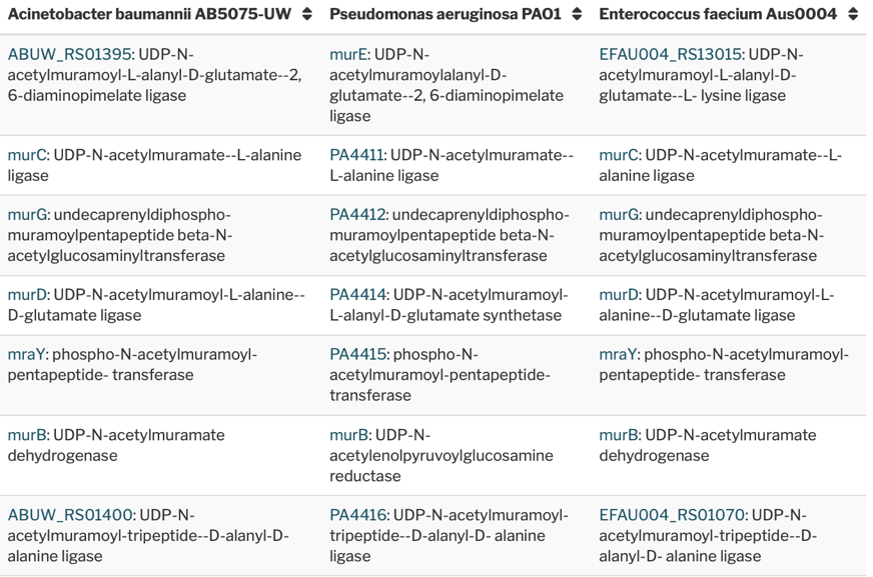
📷 Screenshot: Ortholog analysis depicting the presence of the single copy ‘mur’ genes across all 6 ESKAPE pathogens.
ESKAPE Pathogen Orthologs and Paralogs as Potential Antibiotic Targets
The first clinically used antibiotic was penicillin. This is classed as a beta-lactam molecule, which works by inhibiting cell wall synthesis by disrupting the ability of the peptidoglycan molecules from cross-linking – a chemical bond that joins peptides with sugar backbones creating a strong mesh-like structure. Penicillin-binding proteins (PBPs) are the main target of beta-lactam antibiotics and block the enzyme from completing the cross-linking. Although there are PBP’s in all 6 of the ESKAPE pathogens they differ in frequency and structure. Ortholog analysis shows 7 different orthogroups that contain different PBPs, each will have different propensities to be inhibited by different beta-lactams. Within the orthogroups there are orthologs; genes which can be present across the different pathogens, but have diverged from a common ancestor; and paralogs, which derive from historical gene duplication events within the species. Orthologs generally have the same function, although their structure and nucleotide sequence may differ. While paralogs such as ponA and mcrB within A. baumannii perform a similar function, it is important to note that the selective pressure caused by duplicated genes may result in paralogs acquiring entirely new functions (Perez et al., 2025).
Similarly, while DNA gyrase (the enzyme targeted by fluoroquinolone antibiotics such as ciprofloxacin) is present in all six genomes, ortholog analysis revealed an intriguing difference between the Gram-positive and Gram-negative pathogens. The four Gram-negative organisms each carry a single gyrA gene encoding the primary fluoroquinolone target. In contrast, S. aureus and E. faecium, both Gram-positive, carry two genes in the same orthogroup: gyrA and parC, encoding both DNA gyrase and topoisomerase IV (OG0000405). This reflects a well-established biological difference: in Gram-positive bacteria, topoisomerase IV is the primary fluoroquinolone target, while DNA gyrase plays this role in Gram-negative bacteria (Higgins et al., 2003). MORF’s ortholog analysis tool makes this distinction immediately visible across all six genomes simultaneously.
Genes unique to individual ESKAPE Pathogens
In complete contrast to the genes found in all 6 bacteria, were 598 strain-specific gene groups, genes found in one and only one of the six pathogens. These unique genes are the potential candidates for explaining the distinct behaviours and disease profiles of each organism, assuming they are found within all strains of these species. E. cloacae ATCC 13047 had the highest number of unassigned unique genes at 1,209, while E. faecium Aus0004 had the fewest at 694, suggesting that E. cloacae carries a particularly large repertoire of genes with no detectable homologs in the other five pathogens.
Intrinsic vs acquired resistance
We touched on the ‘spectrum’ of an antibiotic, being the number or range of bacteria that each antibiotic is effective against. Many bacteria are intrinsically resistant to certain types of antibiotics through changes in their cell surface that stop the antibiotic getting in and also pump them out. This is a common feature of all the Gram -ve ESKAPE pathogens due to them all having an outer membrane, which is absent in Gram +ve bacteria.
As well as these long-term adaptions to the cell structure, there are other mechanisms to become resistant to antibiotics, which often only require one or a few genes. As antibiotics are made naturally by bacteria and fungi, and have been for millions of years, there are natural systems used by the bacteria which make them resistant – they don’t want to kill themselves. If these genes could be shared then other bacteria could ‘acquire’ resistance to them, simply by recruiting genes that already exist somewhere out there in the environment. This is a very possible scenario as bacteria are very good at acquiring DNA either directly from the environment (from other dead and lysed bacteria) or through more specific directed transfer systems. There are three textbook routes that we know about for this to occur, and likely others we are yet to discover. These are:
- Transformation: Where the bacteria can simply take up free DNA from the environment, which it then moves into its own genome.
- Transduction: Where a virus (bacteriophage) when escaping from a bacterium it has killed, packages some of that organisms DNA with its own DNA. Hence when it injects its DNA into another bacterium this DNA can sometimes end up integrated with the phage DNA into the chromosome.
- Conjugation: Where two closely related bacteria can transfer DNA between them directly by creating a bridge (pili).
DNA is being transferred all the time between bacteria and most of this is not kept and is degraded, if the DNA encodes an antibiotic resistance gene, it could immediately provide a benefit to the cell and will be kept. Hence we can see how bacteria can ‘acquire’ resistance genes and hence resistance and these processes we call horizontal gene transfer (HGT).
Pseudomonas aeruginosa has high intrinsic resistance to antibiotics
Pseudomonas aeruginosa is resistant to many antibiotics due to its high level of intrinsic resistance. Like the three other Gram -ve ESKAPE pathogens, the outer membrane is a primary factor in this intrinsic resistance, but P. aeruginosa has further adaptations that enhance the function of the outer membrane further, which lead to decreased permeability of antibiotics across it and provide additional capacity to recognise and pump out antibiotics before they can reach their targets.
While the outer membrane of Gram-negative bacteria has various benefits, it also has some downsides for the cell. One of these is directly relevant to intrinsic resistance. Bacteria rely on taking up nutrients from the environment, which they need to do all the time to grow. These small molecules must pass through the outer membrane easily and bacteria use proteins called porins that form channels in these membranes. The majority of Gram-negative bacteria have large porin channels, whereas P. aeruginosa has evolved to have smaller and selective porins. This gives the bacteria the advantage of a reduced permeability cell wall. If we look at the widely studied OmpF porin of E. cloacae ATCC 13047 we can see that the molecular weight of the protein is 38.48 kDa, much larger than OprG of P. aeruginosa (25.19kDa), Also through the MORF Gene Details page we can click on the UniProt ID which will take us to the feature viewer and see the protein structure of the channel.
If we search ‘porins’ under the ortholog analysis tool we will find not only does P. aeruginosa harbours more porins compared to the rest of the ESKAPE pathogens, but we will also see that the two Gram-positive organisms have a distinct lack of genes encoding porins. OG0000039 is a good example of this; with 19 porins listed for P. aeruginosa, compared to 1 for K. pneumoniae, 1 for E. cloacae, 3 for A. baumannii and none for S. aureus and E. faecium.
To complement its arsenal of porins, P. aeruginosa has remarkable number of RND transporter proteins involved in the efflux pump complex. Searching ‘RND’ brings up 12 hits, 11 of these are Orthologous groups. OG0000065 has quite a substantive list for P. aeruginosa compared to the other ESKAPE pathogens. As the RND pumps often have broad specificity for hydrophobic substrates, the plethora of systems enables P. aeruginosa to often have multiple pumps which can remove antibiotics from the periplasm and inner membrane. It is also noticeable that like the porins, there are no orthologous genes for S. aureus and E. faecium, again due to being Gram-positive bacteria.
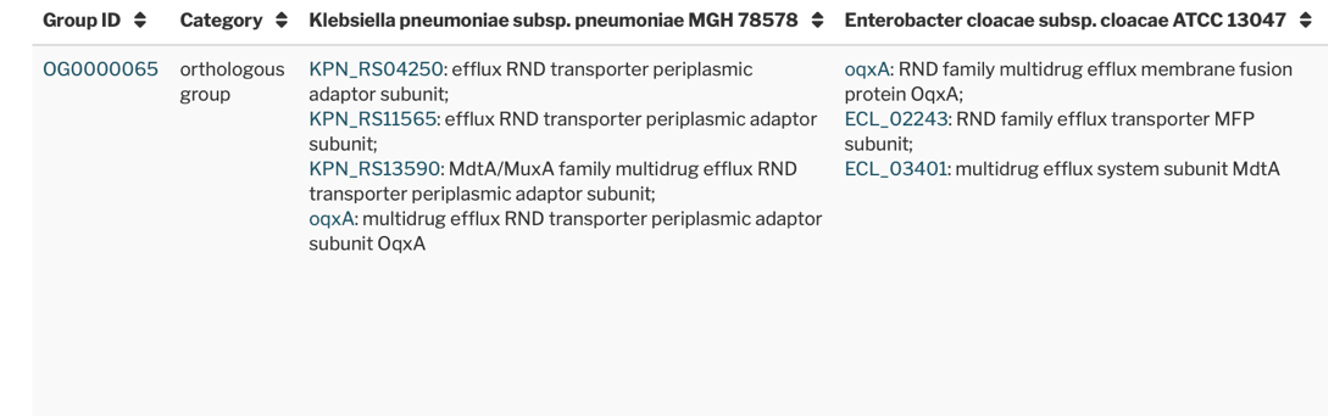
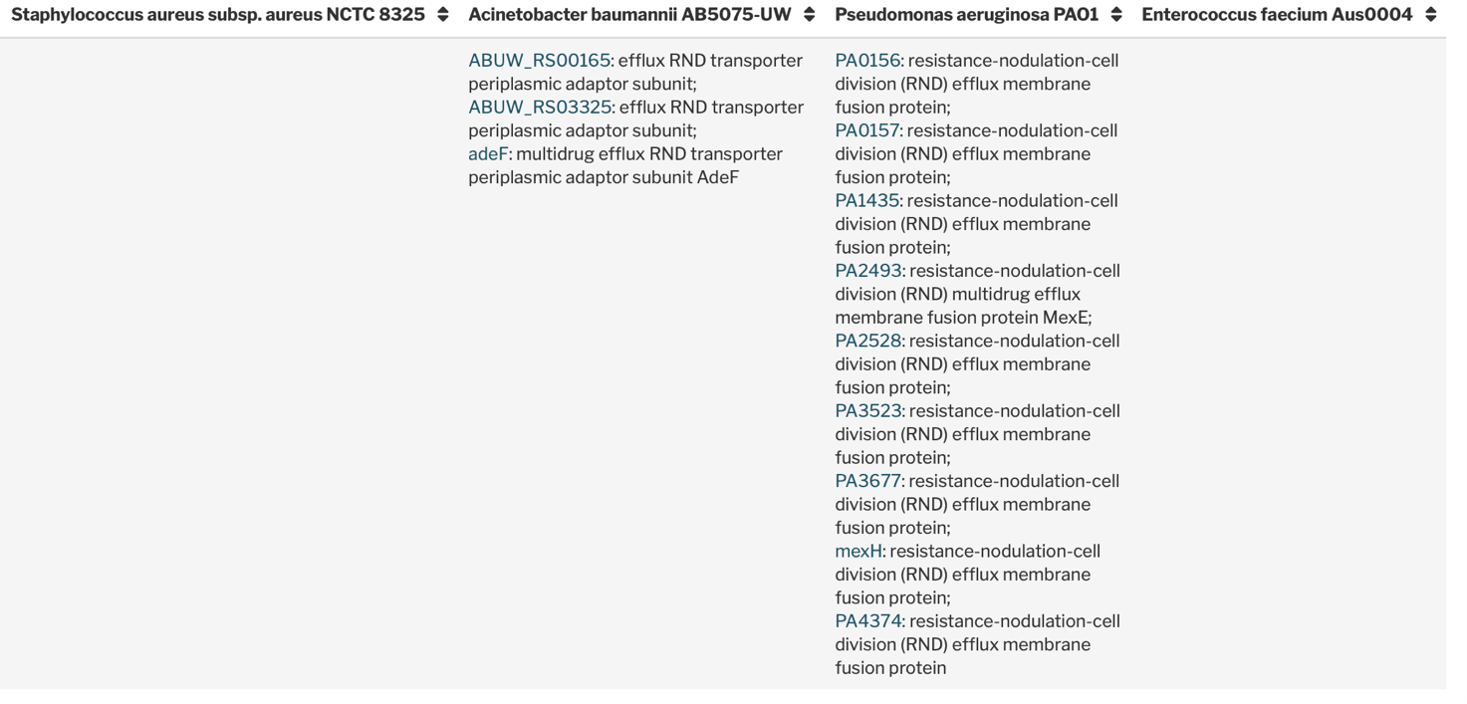
📷 Screenshot: Comparison of RND pumps for each ESKAPE pathogen; P. aeruginosa has significantly more than the other pathogens, and the Gram-positive pathogens lack these orthologs.
Acquired resistance genes confer high-level resistance to front-line antibiotics
As mentioned earlier resistance genes can be acquired through three different mechanisms. If we look at the Gram-positive E. faecium we will find there is a cluster genes involved in resistance to Vancomycin. It is no coincidence there is a spike in the GC content of that part of the genome. Bacterial chromosomes generally have an ‘average’ of Guanine and Cytosine nucleotides, where there is genomic acquisition from other species this differs average by creating these spikes; evidence of DNA insertion. It is likely that a mobile genetic element has integrated into the chromosome of E. faecium, bringing the van genes with it. In the same regions are genes encoding integrase and excisionase genes, hallmarks genes for some mobile genetic elements.
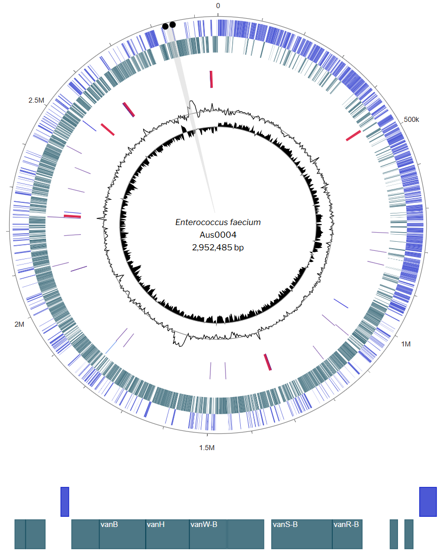
📷 Screenshot: E. faecium genome showing the vancomycin gene array with integrase downstream. Note the spike in GC content at the site of the array, suggesting genomic integration of foreign DNA.
Vancomycin works in a similar fashion to beta lactams by inhibiting the synthesis of the cell wall in Gram-positive organisms, however where beta-lactams bind to the PBP, vancomycin binds to a peptide precursor of the cell wall synthesis pathway, creating a weak and incomplete cell wall. Vancomycin is generally not used for Gram-negative infections due to the outer membrane preventing vancomycin, a bulky molecule, from entering the cell. The van genes encode proteins that enable to cell to make a different peptide to link the sugar chains, which is not recognised by the antibiotic. This cunning protection mechanism resembles how the bacteria that naturally make vancomycin protect themselves, suggests a likely origin for these acquired genes.
Another example of the ESKAPE pathogens of acquiring resistance genes is the evidence of bacteriophage integration of the blaOXA-23 gene into the Acinetobacter baumannii chromosome. blaOXA-23 encodes a protein conferring carbapenem resistance; carbapenems are considered last line antimicrobials and are essential for treating ESBL (Extended-spectrum beta-lactamase) infections. A. baumannii has a large insertion of approximately 20kb of phage related genes. Within these genes is blaOXA-23. The successful integration of the prophage into the chromosome complete with a carbapenem resistance payload adds to the threat of a potentially untreatable infection.
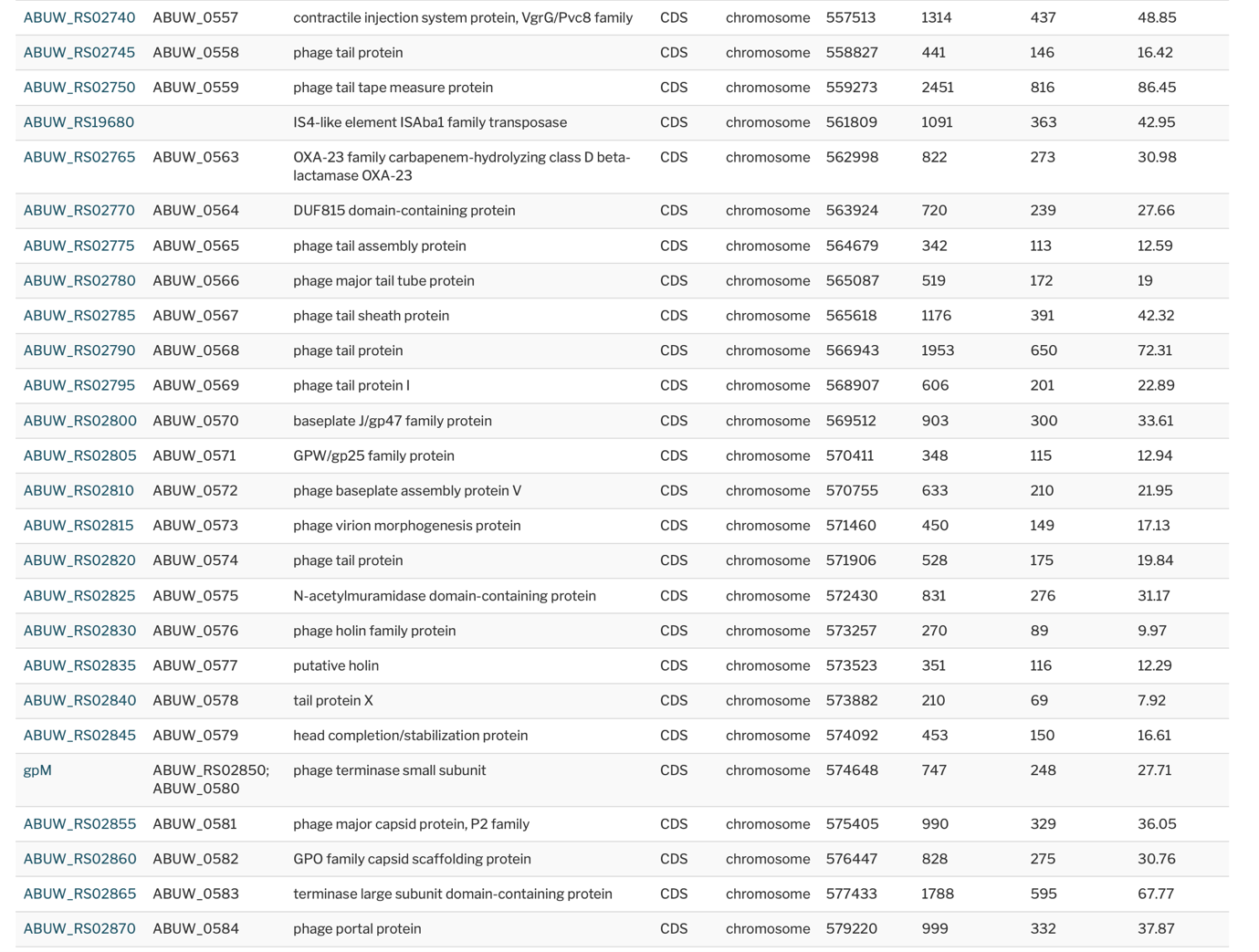
📷 Screenshot: A. baumannii gene features shows a sequential list of genes encoded along the genome. OXA-23 is found within the phage gene array.
Pinpointing Unique Virulence Genes Using BLAST
To explore the uniqueness of specific virulence genes, we used MORF’s BLAST Search tool. We used the protein sequence of the alpha-hemolysin (Hla) from S. aureus NCTC 8325 to search the six ESKAPE genomes.
The results were striking. Within the S. aureus genome itself, BLAST identified an entire family of related toxin genes including leukocidins and leukotoxins, confirming that S. aureus has evolved a diverse arsenal of membrane-destroying toxins from a common ancestral gene. When the same search was run against the other five ESKAPE genomes, no significant matches were found in any of them. This confirms that the hemolysin toxin family is entirely unique to S. aureus among the ESKAPE pathogens, a finding that illustrates why S. aureus infections are particularly damaging to host tissues.
A search for catalase, an enzyme that protects bacteria from oxidative stress by breaking down hydrogen peroxide, revealed a broader distribution across the ESKAPE pathogens, as a more general stress response found widely in bacteria. Significant matches with the haem-dependent Staphylococcus aureus enzyme were found in five of the six pathogens, with only Enterococcus faecium Aus0004 returning no hits. This does in fact have a catalase, but of a different family of Mn-dependent enzymes. Pseudomonas aeruginosa stood out by having genes encoding three distinct catalases (katA, katB, and katE), suggesting an enhanced capacity for oxidative stress resistance that may contribute to its persistence in hostile environments such as the cystic fibrosis lung, where oxidative burst is a key killing mechanism of cells of the innate immune response (Malhotra et al., 2019). Together these three BLAST searches illustrate how MORF’s BLAST tool can rapidly reveal contrasting patterns of gene presence and absence across related pathogens.
The Staphylococcus aureus Toxin Arsenal: A Closer Look
The BLAST results prompted a deeper investigation into the toxin genes of S. aureus. Searching the genome for hemolysin and leukocidin genes revealed a remarkably sophisticated toxin arsenal. S. aureus NCTC 8325 encodes three haemolysin genes (hla, hlb, and hlg), alongside two leukocidin subunits (lukS and lukF) and two leukotoxins (lukD and lukE).
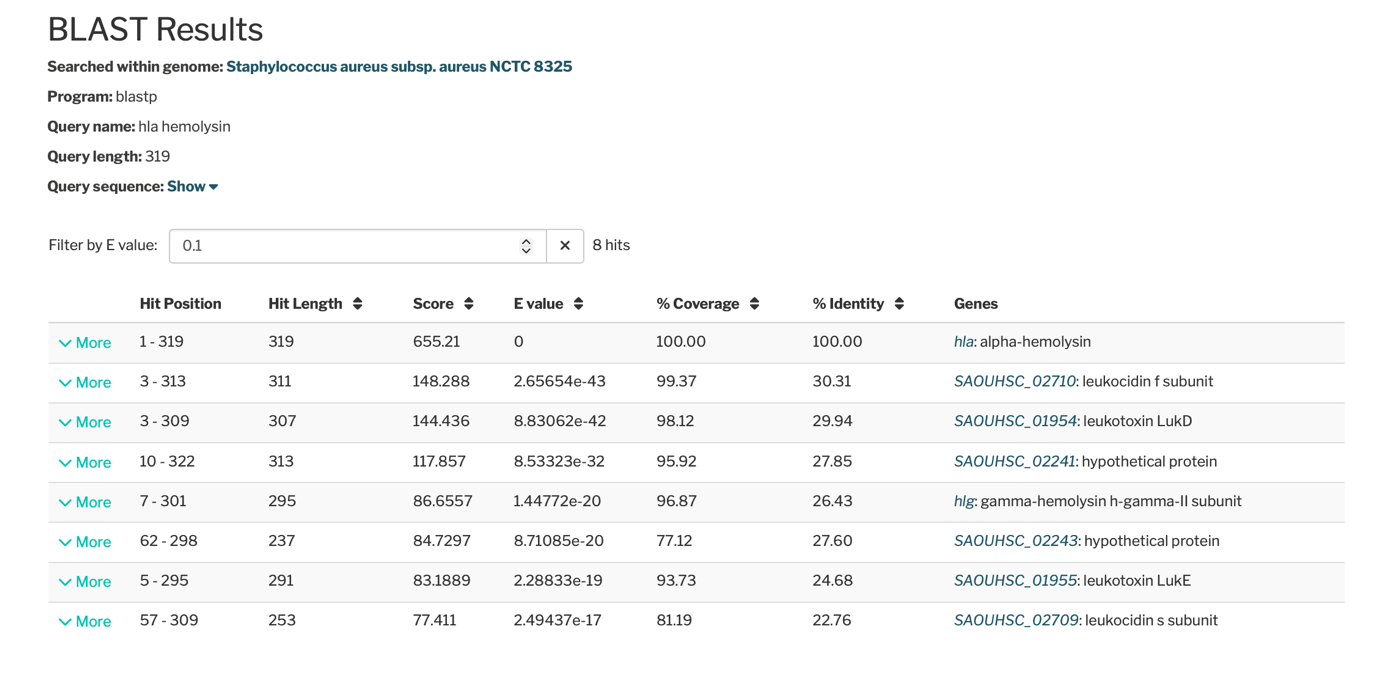
📷 Screenshot: The ESKAPE Pathogens project homepage showing the six genome entries and navigation options
The leukocidins and gamma-hemolysin are bicomponent toxins. Each functional toxin is assembled from two separate protein subunits, an S-subunit and an F-subunit, which are secreted individually and then assemble on the surface of host cells to form a pore that destroys the cell membrane. This means that the seven toxin-related genes in NCTC 8325 collectively encode five distinct functional toxins. The genes encoding each toxin pair sit adjacent to each other on the chromosome and are co-transcribed in an operon, which can be easily visualised in the Genome Features view.
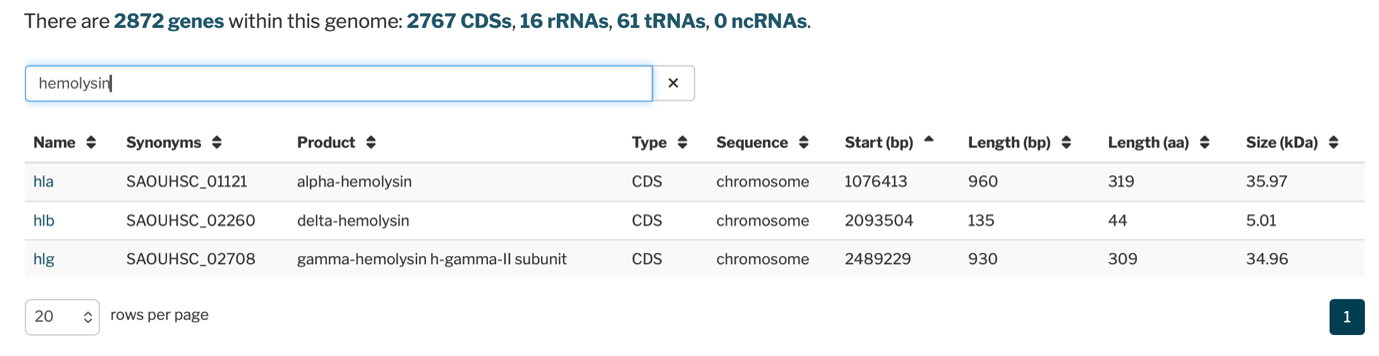

📷 Screenshot: Genome Features show the seven genes associated with hemolysin and leukotoxin production. The leukocidin and leukotoxin genes are located adjacently in pairs along the chromosome.
In striking contrast, searching for equivalent toxin genes in the other five ESKAPE pathogens revealed a completely different picture. While K. pneumoniae, E. faecium, and E. cloacae return results when searching for “toxin”, the vast majority are toxin-antitoxin systems, internal bacterial regulatory modules entirely unrelated to host cell attack, but important for maintaining plasmid stability. P. aeruginosa encodes exotoxin A (toxA), a potent virulence factor that works through a completely different mechanism, inhibiting host cell protein synthesis rather than punching holes in membranes. A. baumannii carries zonular occludens toxin genes that disrupt host cell junctions. These findings illustrate that while all six ESKAPE pathogens are toxigenic, they have each evolved entirely different offensive strategies, a diversity that MORF’s gene search and BLAST tools can rapidly reveal.
Conclusion
The ESKAPE pathogens represent six of the most serious challenges in modern medicine. By making their genomes accessible and explorable through MORF, researchers, educators, and students can engage directly with the genomic data that underpins our understanding of antibiotic resistance.
From the unique toxin arsenal of S. aureus to the inducible resistance mechanism of E. cloacae, each pathogen tells a different genomic story, and MORF makes those stories visible and accessible to the wider research community.
This case study was produced using MORF Genomes. All six ESKAPE pathogen genomes are publicly available in the MORF Demos project group at morf-db.org.
References
HIGGINS, P. G., FLUIT, A. C. & SCHMITZ, F. J. 2003. Fluoroquinolones: structure and target sites. Curr Drug Targets, 4, 181-90.
MALHOTRA, S., HAYES, D. & WOZNIAK, D. J. 2019. Cystic Fibrosis and Pseudomonas aeruginosa: the Host-Microbe Interface. Clinical Microbiology Reviews, 32, 10.1128/cmr.00138-18.
MURTHA, A. N., KAZI, M. I., SCHARGEL, R. D., CROSS, T., FIHN, C., CATTOIR, V., CARLSON, E. E., BOLL, J. M. & DöRR, T. 2022. High-level carbapenem tolerance requires antibiotic-induced outer membrane modifications. PLOS Pathogens, 18, e1010307.
PEREZ, M., HURM, K. & LIBERLES, D. A. 2025. Understanding Functional Evolution in Orthologs and Paralogs. J Mol Evol, 93, 730-739.