News & Updates
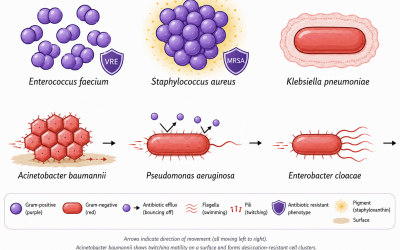
Why the ESKAPE pathogens are so hard to kill
Why the ESKAPE pathogens are so hard to kill? The 317 genes every superbug shares Six of the most dangerous bacteria in medicine have far less in common than you'd expect. What they do share is exactly where our best antibiotics aim. That ought to make them easy to...
Exploring the ESKAPE Pathogens: What Their Genomes Reveal
The ESKAPE Pathogens: Six Major Medical Challenges Every year, hospital-acquired infections kill hundreds of thousands of people worldwide. Behind many of these deaths are six bacteria known collectively as the ESKAPE pathogens: Enterococcus faecium, Staphylococcus...
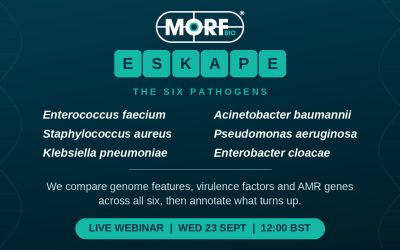
ESKAPE Comparative Genomics: Webinar & Tutorial
Watch the webinar and complete the tutorial below to find out what you can learn about the ESKAPE pathogens from their genomes. Introduction MORF Genomes is a web-based platform that allows you to explore, compare, and analyse microbial genome sequences without...
MORF-Bio Secures Funding to Accelerate Microbial Digital Twin Platform
We're pleased to share that MORF-Bio has secured an Innovate UK Investor Partnerships Award, unlocking a new investment round led by Deeptech Seed Fund and matched by Helix Research and Enterprise. The funding marks an important step in the next phase of MORF's...

MORF-Bio Turns One: From University Spinout to Accelerating Discovery
One year ago, MORF-Bio officially incorporated as a company. What began as a research-driven platform developed at the University of York has rapidly evolved into a growing biotechnology company helping researchers unlock more value from microbial data. And what a...
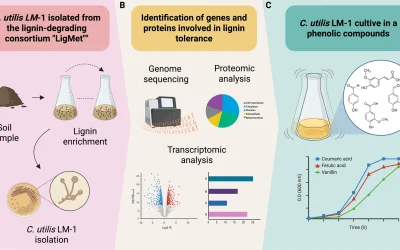
Interactive insight: visualising the physiological shifts of industrial yeast
While industrial paper-making creates a massive bottleneck of toxic, lignocellulosic waste, a new multi-omics study has mapped exactly how a unique yeast strain overcomes this hostile environment to unlock new possibilities for bio-production. If you are a plant,...
Join Our Newsletter

Empowering Researchers, Advancing Biotech
Department of Biology,
University of York,
York, YO10 5DD

© 2026 MORF-Bio. All rights reserved